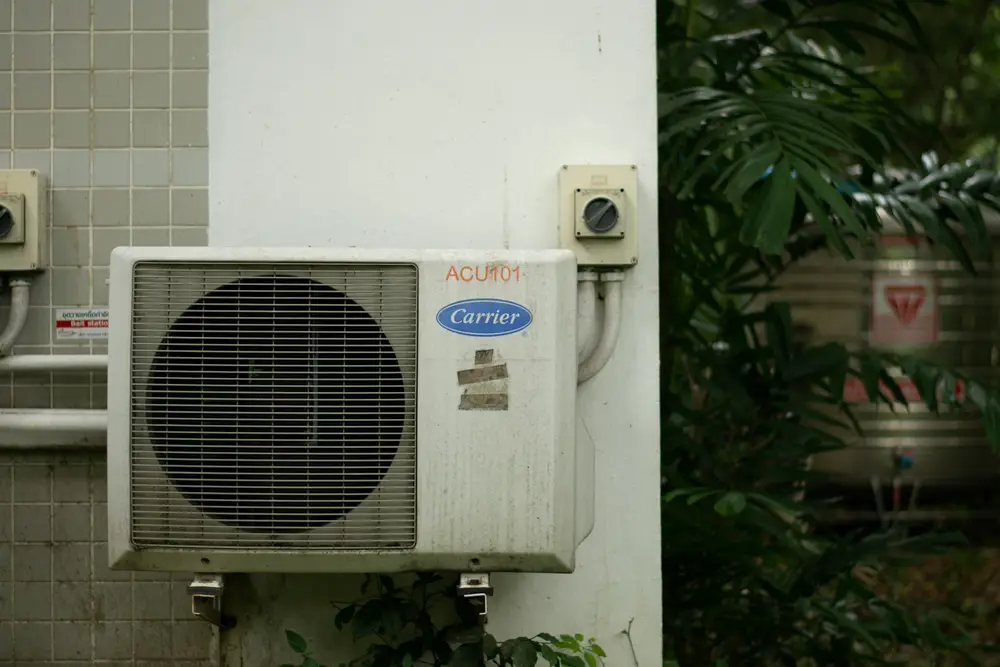
Why AC systems grow mold here
Your AC pulls a lot of water out of the air, day after day, for most of the year. That water drips into a drain pan and runs out a condensate line. When any part of that path clogs or leaks, you get standing water in a dark place with dust for food. That is how mold starts.
- Clogged condensate line. Algae and sludge block the line, the pan fills up and water spills onto the ceiling or closet floor.
- Sweating ducts and vents. Cold air in the ducts meets hot, humid air in the attic or around the vent. The outside of the duct or the drywall around the vent gets wet.
- An AC that is too big. An oversized unit cools the house fast and shuts off before it removes much moisture. The air stays damp.
- Thermostat set high or off. When the AC barely runs, indoor humidity climbs. This is common in seasonal homes left closed for the summer.
Signs of mold in or around the AC
- A musty smell that starts when the AC turns on
- Dark spots on the ceiling around supply vents
- Water stains or wet drywall near the air handler closet
- The AC shutting off because the drain pan safety switch tripped
- Growth on the blower or coil that an AC tech points out
Who does what
AC mold jobs usually take two trades. A mold remediation company handles the house: ceiling drywall around vents, the air handler closet, wet framing and the air in the work area. An AC company handles the equipment: the coil, the blower, the drain line and any duct that needs to be replaced.
Order matters. The AC work often happens first or at the same time, so the system doesn't blow dust into rooms that were just cleaned. Many mold companies work with AC companies and can set this up. Ask about it when you call.
What the cleanup looks like
Around vents and the air handler
Moldy drywall around vents and in the AC closet gets cut out inside a sealed work area. Framing gets HEPA vacuumed and cleaned. The area is dried before new drywall goes up.
Inside the ducts
Flex duct with mold growth is usually replaced. Metal duct can be cleaned with special brushes and HEPA vacuums. Fiberglass duct board is often replaced too.
Keeping it from coming back
Keep the condensate line clear, change filters on schedule and keep indoor humidity below 60 percent. If the house stays damp even with the AC running, ask the AC company whether the unit is the right size or whether a whole-home dehumidifier makes sense.