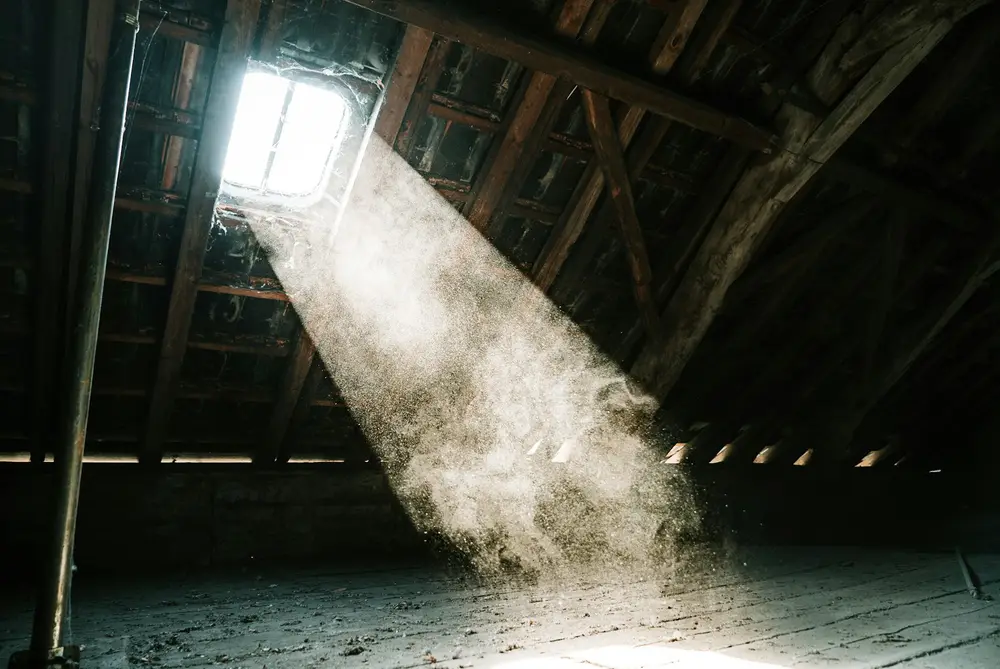
Why Melbourne attics get moldy
Florida attics get hot, and the air around them stays humid. Add a little water and mold grows fast on roof decking and trusses. Here is where that water usually comes from:
- Roof leaks. Wind-driven rain from summer storms and tropical systems pushes water under shingles, tile and flashing. The leak may only drip during heavy rain, so it goes unnoticed.
- The AC air handler. Many homes here have the air handler in the attic. A clogged drain pan or condensate line overflows onto the ceiling drywall and framing.
- Sweating ducts. Cold supply ducts in a hot attic collect water on the outside. Torn duct wrap or loose connections make it worse.
- Bath fans that dump into the attic. A bathroom fan should blow outside. If it ends in the attic, it fills the space with steam every time someone showers.
- Blocked soffit vents. Insulation pushed against the soffits can block airflow, so damp air sits under the roof.
Signs of mold in the attic
- Black or gray spots on the underside of the roof decking, often near the eaves or above the air handler
- Wet, matted or stained insulation
- Rusty nail tips poking through the decking
- A brown ring or stain on the ceiling below
- A musty smell when you open the attic hatch
If you aren't comfortable climbing into the attic, don't. A mold company will check it and take photos for you.
How attic mold removal works
1. Stop the water
A roofer fixes the leak, an AC company clears or repairs the drain, or the bath fan gets vented outside. Cleaning before this step is wasted money.
2. Protect the house
The crew seals the attic hatch area with plastic and sets up a HEPA air filter so dust stays in the attic.
3. Clean the decking and framing
Wood gets HEPA vacuumed and then scrubbed or sanded. Some companies use soda blasting or dry ice blasting on large areas. Ask which method they plan to use and what it costs.
4. Replace wet insulation
Insulation that got wet or moldy comes out in bags. New insulation goes in once the wood is clean and dry.
5. Dry and check
The crew checks moisture readings on the wood before they leave. A sealer, if used, goes on at the very end.
Getting a new roof after a storm? Tell the roofer and the mold company about each other. Bad decking can be replaced during the reroof, and the mold work can be timed so new materials aren't put over moldy wood.