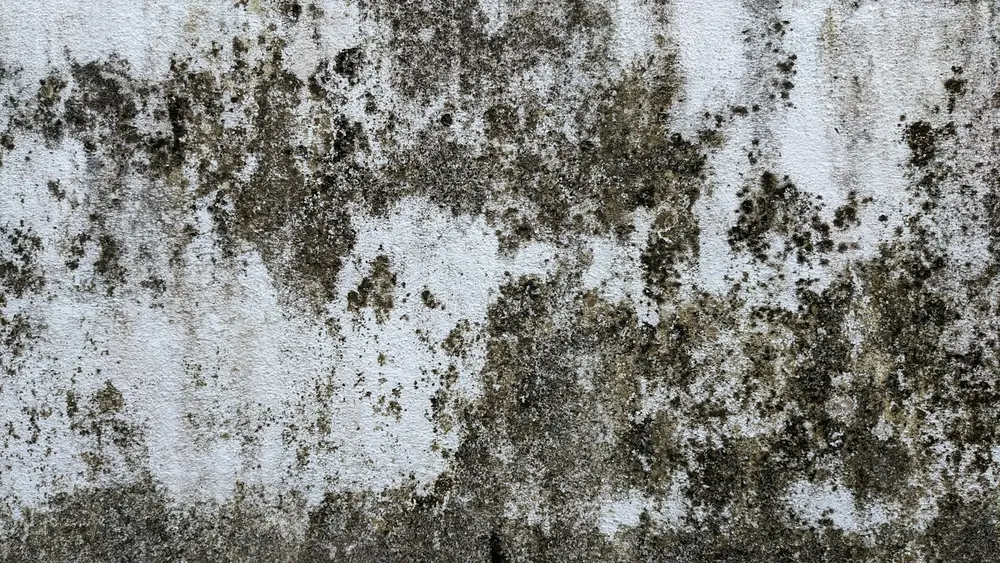
What people mean by black mold
"Black mold" usually means Stachybotrys chartarum, a dark green to black mold that grows on drywall paper and wood that stay wet for a long time. But many common molds look black or dark green. You can't tell which mold you have just by looking.
The good news is that you don't need to know. Any mold growing inside your home gets the same treatment: fix the water problem and remove the mold.
Where it shows up in Melbourne homes
- On drywall behind or under sinks and toilets with slow leaks
- In the AC closet and on ceilings around supply vents
- On bathroom ceilings and walls with poor exhaust fans
- On window sills and the drywall below older windows
- Under carpet near sliding glass doors after storms
- On closet walls and stored items in homes with high humidity
What not to do
- Don't dry-scrub or sand it. That puts spores in the air and spreads them to other rooms.
- Don't count on bleach for drywall. It can lighten the stain while mold stays inside the board.
- Don't paint over it. Paint hides the stain for a while, and the mold keeps growing under it.
- Don't point a fan at it. Moving air spreads spores before the area is sealed off.
How black mold is removed
The work follows the same steps as any mold remediation job. The crew seals off the area with plastic, runs HEPA air filters, and cuts out moldy drywall, insulation and carpet pad. Framing and hard surfaces get HEPA vacuumed and cleaned. The area is dried and checked before new materials go in.
The water source gets fixed too: the leak, the AC drain, the window or the humidity problem. Without that, black mold tends to come back in the same spot.
Health questions? Mold can cause a stuffy nose, coughing, wheezing and itchy eyes, mostly in people with allergies or asthma. People with weak immune systems can be at higher risk. Talk with your doctor about symptoms. This page is not medical advice.